
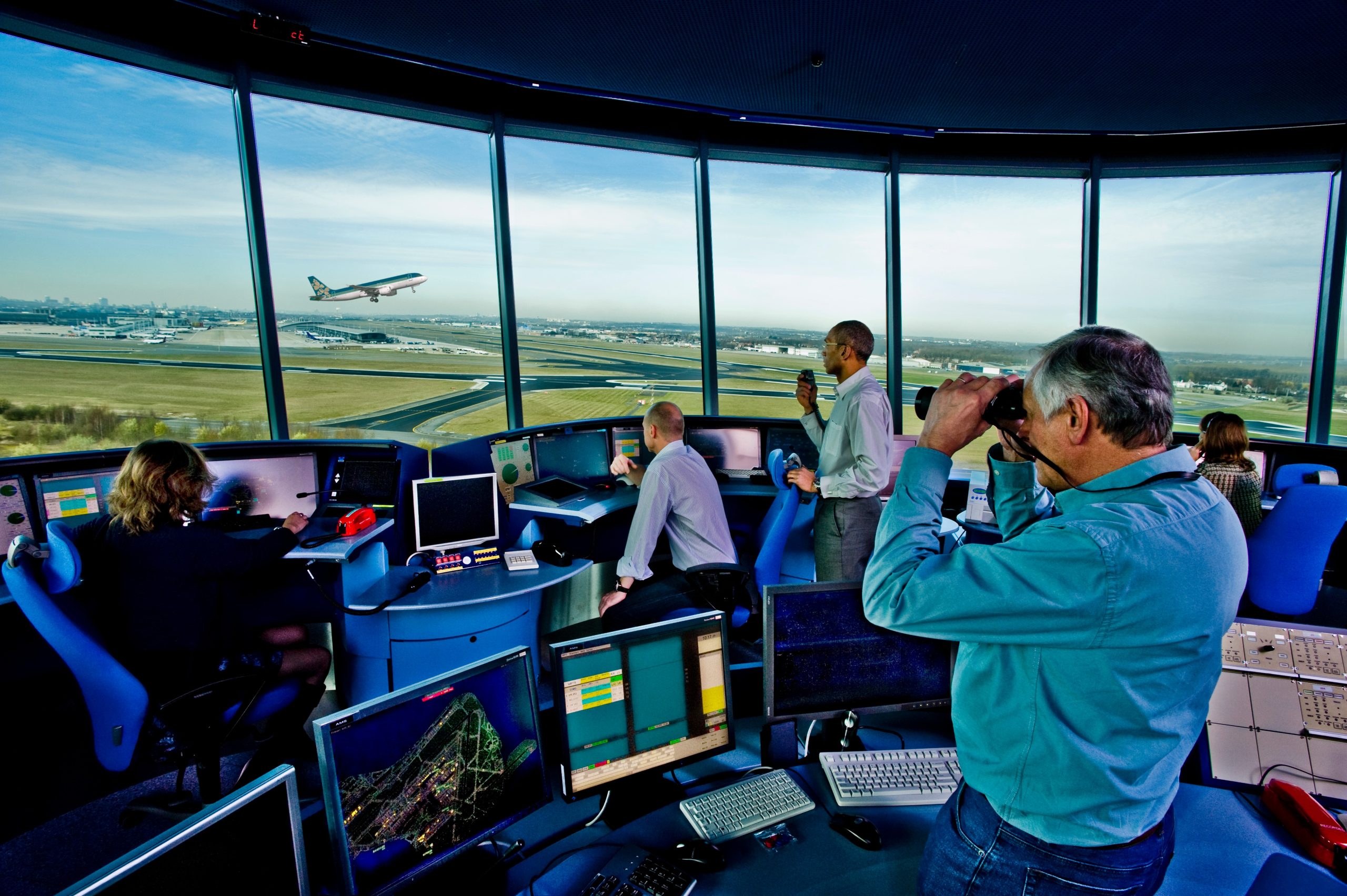
Air traffic controllers play an important role in the aviation industry, ensuring the safety and efficiency of air travel. Their primary responsibility is managing the aircraft’s movement in the sky and on the ground, coordinating takeoffs and landings, and guiding pilots during their flights. This task involves high precision and decision-making, as air traffic controllers must constantly monitor and communicate with multiple flights, adjusting their instructions based on changing conditions such as weather, traffic, and emergencies.
The importance of being an air traffic controller cannot be overstated. They are the unseen guardians of the sky, ensuring that aircraft maintain safe distances from each other, navigating pilots around hazards, and managing the flow of air traffic to minimize delays. Their work directly impacts the safety of thousands of passengers and crew members daily, making it a profession of high responsibility and pressure.
The job of an air traffic controller is highly demanding, requiring intense concentration, excellent communication skills, and the ability to make quick, informed decisions. Controllers must undergo rigorous training and certification processes and are expected to maintain their skills and knowledge at a high level throughout their careers. The role demands a deep understanding of aviation regulations, procedures, and the intricacies of the airspace they oversee. While the job comes with its share of stress and demands, the sense of accomplishment and the critical nature of their work make it a uniquely rewarding career.
Why Become an Air Traffic Controller?
Air traffic controllers play an essential role in the aviation sector, which is always in demand. Their critical role in ensuring safe air travel means that the job comes with high job security.
Air Traffic Controllers typically receive competitive salaries reflecting the required skill, training, and responsibility. Air traffic controllers are among the better-paid positions in many countries, even at entry levels. In addition to a good salary, air traffic controllers often enjoy comprehensive benefits packages. These include health insurance, retirement plans, paid time off, and sometimes unique travel benefits or discounts. The exact benefits can vary by country and employer but are generally designed to be attractive due to the demanding nature of the job.
Air traffic controllers are also key to maintaining the efficiency of air travel. They manage the sequencing of aircraft, reducing delays and ensuring that airspace is used optimally. This management helps minimize fuel consumption and reduce the environmental impact of flights. By effectively coordinating takeoffs, landings, and en-route flight paths, ATCs contribute to smoother operations and better on-time performance for airlines.
Requirements to Become an Air Traffic Controller
Educational Prerequisites
- High School Diploma or GED: A fundamental requirement for aspiring air traffic controllers is to have completed high school or have a General Educational Development (GED) certificate.
- Postsecondary Education: While not mandatory, having an associate’s or bachelor’s degree, especially from an Air Traffic Collegiate Training Initiative (AT-CTI) program, can be beneficial. These programs are designed to provide education and training that aligns with the skills required by the Federal Aviation Administration (FAA).
- FAA Training: Regardless of educational background, all candidates must undergo training at the FAA Academy. Entrance into this training requires passing the FAA air traffic pre-employment tests, which assess essential knowledge and skills relevant to air traffic control duties.
Age, Medical, and Legal Requirements
- Age Requirement: Candidates must be under the age of 31 when applying to the FAA Academy. This is because the FAA mandates that air traffic controllers must retire at the age of 56, and the training and experience requirements mean that controllers need several years to become fully competent in their roles.
- Medical Requirements: Applicants must pass a medical examination that assesses vision, hearing, and general physical health to ensure they can perform the job’s demands. This includes having no physical or mental conditions that could impair their ability to manage air traffic safely.
- Security and Background Checks: Candidates must undergo a security investigation and must be able to obtain a security clearance. This process involves checks into the applicant’s criminal record, financial history, and any potential issues that might affect national security or trustworthiness.
- Drug Testing: Applicants must pass a drug screening test, as drug use is incompatible with air traffic control responsibilities.
- Legal Requirements: Candidates must be U.S. citizens to work as air traffic controllers for the FAA.
Training and Certification as an Air Traffic Controller
Becoming an air traffic controller is challenging and requires significant learning and skill development commitment. The FAA’s rigorous training and certification process ensures that controllers are well-equipped to manage the safety and efficiency of the national airspace system.
FAA Academy Training Process
FAA Academy training is the initial step for aspiring air traffic controllers. This training occurs at the FAA Academy in Oklahoma City, OK.
- Eligibility: To be eligible for FAA Academy training, candidates must be United States citizens under the age of 31 at the time of application, have three years of progressively responsible work experience, have a bachelor’s degree, or have a combination of both. Additionally, they must pass a medical examination, a security investigation, and the FAA air traffic pre-employment tests.
- Application: Interested individuals apply through the USAJobs website when the FAA announces an open vacancy.
- Academy Training: Once selected, trainees attend the FAA Academy. The duration and specific curriculum depend on the track for which a candidate is selected: En Route Controller or Terminal Controller. Training typically lasts from 2.5 to 5 months and includes classroom instruction and simulation training. Subjects covered include aviation weather, airspace, clearances, aircraft separation standards, and emergency procedures.
- Graduation and Placement: Graduates from the FAA Academy are assigned to an air traffic control facility as developmental controllers, where they begin on-the-job training. The assignment is based on the FAA’s staffing needs, and trainees cannot choose their location.
Certification and On-The-Job Training Requirements
After completing the FAA Academy training, the certification and on-the-job training (OJT) process begins, which varies in length depending on the complexity of the facility and the individual’s learning pace.
- On-the-Job Training (OJT): This training is conducted at the facility where the trainee has been placed. Trainees work under the supervision of certified air traffic controllers and are gradually given more responsibility as they progress. OJT includes working on actual traffic scenarios in various positions, such as ground control, radar associate, and radar final control.
- Certification: To become fully certified, trainees must complete the OJT and pass a series of evaluations at their assigned facility. This process can take anywhere from 1 to 3 years. Certification is position-specific, meaning a controller is certified for a particular control position within a facility.
- Continuing Education: Even after certification, air traffic controllers must undergo regular training and recertification to maintain their current skills and knowledge. This includes annual simulations and training on changes to aviation regulations or procedures.
Potential Career Paths Within Air Traffic Control
Entry-Level Air Traffic Controller
It begins with rigorous training at an FAA (Federal Aviation Administration) academy or an equivalent institution in other countries. Initial positions are often as trainees under supervision in air traffic control towers or en-route centers.
Certified Professional Controller (CPC)
After completing training and passing certification exams, controllers can work unsupervised. They manage aircraft through their assigned airspace sectors, ensuring safe distances between aircraft.
Training Instructor
Experienced ATCs can become instructors and train new recruits at the FAA academy or other training facilities. This role is crucial for imparting practical skills and knowledge to the next generation of controllers.
Supervisor/Management Positions
With experience, ATCs can move into supervisory roles, overseeing the operations within control towers or centers. This could lead to higher management positions, such as air traffic manager, where they are responsible for the entire operation of a facility.
FAA Headquarters or International Civil Aviation Organization (ICAO) Roles
Advanced career paths may also lead to positions within the FAA headquarters for policy, safety standards, and regulation roles or with international bodies like the ICAO.
Take the First Step Towards a Career as an Air Traffic Controller
Becoming an air traffic controller offers a unique opportunity to play a critical role in the aviation industry and provides a fulfilling career with competitive salaries and benefits. Remember, success in this field demands technical proficiency, strong communication skills, a calm demeanor under pressure, and a deep commitment to ensuring air travel safety.
If you’re passionate about aviation and eager to make a significant impact, the path to becoming an air traffic controller could be your calling. The sky is the limit, and your efforts can help ensure it remains a safe place for everyone.
